

Why use performance parts in 2026: benefits for vehicles
Upgrading to performance brake parts can reduce stopping distance by up to 30%, a critical safety advantage on European roads where weather and traffic conditions demand reliable vehicle response. Many drivers hesitate to explore aftermarket performance parts due to misconceptions about warranties, costs, and ride comfort. This guide clarifies what performance parts truly offer, addressing common doubts while explaining how authentic upgrades enhance safety, durability, and driving experience for European automotive enthusiasts.
Table of Contents
- Introduction To Performance Parts
- How Performance Parts Improve Safety And Durability
- Common Misconceptions About Aftermarket Performance Parts
- Comparison And Framework For Selecting Performance Parts
- Real World Examples And User Perspectives
- Practical Application: Choosing And Maintaining Your Performance Parts
- Summary: Maximizing Vehicle Potential With Performance Parts
- Explore Quality Automotive Performance Parts At NordRace
- FAQ
Key takeaways
| Point | Details |
|---|---|
| Performance parts enhance critical systems | Upgraded brakes, suspension, and mounts improve safety, handling, and vehicle longevity beyond factory specifications. |
| Common myths are often incorrect | Modern performance parts maintain comfort while certified installations preserve warranties. |
| Selection requires informed evaluation | Quality, compatibility, driving style, and professional installation determine success. |
| Real drivers report measurable gains | European users experience enhanced safety, reduced maintenance costs, and improved confidence. |
| Proper maintenance maximizes value | Regular care extends service life and sustains long-term performance benefits. |
Introduction to performance parts
Performance parts are designed to enhance vehicle function beyond stock specifications, offering improvements in braking power, suspension responsiveness, and structural durability. Unlike original equipment manufacturer (OEM) parts that prioritize cost efficiency and broad compatibility, performance parts target specific functional gains. They differ from generic aftermarket components by emphasizing engineering quality, material selection, and rigorous testing standards.
European drivers encounter diverse conditions from alpine passes to urban congestion, making performance upgrades particularly valuable. Common performance part categories include:
- Brake discs and pads engineered for higher thermal resistance
- Suspension components like reinforced strut mounts and stabilizer links
- Upgraded engine mounts and bushing kits for improved chassis response
- High-performance tires designed for varied weather conditions
These components serve dual purposes in vehicle maintenance and enhancement. They replace worn factory parts while simultaneously elevating capability. For drivers prioritizing safety and longevity, performance parts represent a strategic investment rather than luxury modification.
The performance parts overview landscape has evolved significantly by 2026. Manufacturers now blend track-proven technology with daily drivability, addressing earlier concerns about harsh ride quality. This evolution makes performance upgrades accessible to mainstream European drivers seeking reliability improvements without sacrificing comfort.
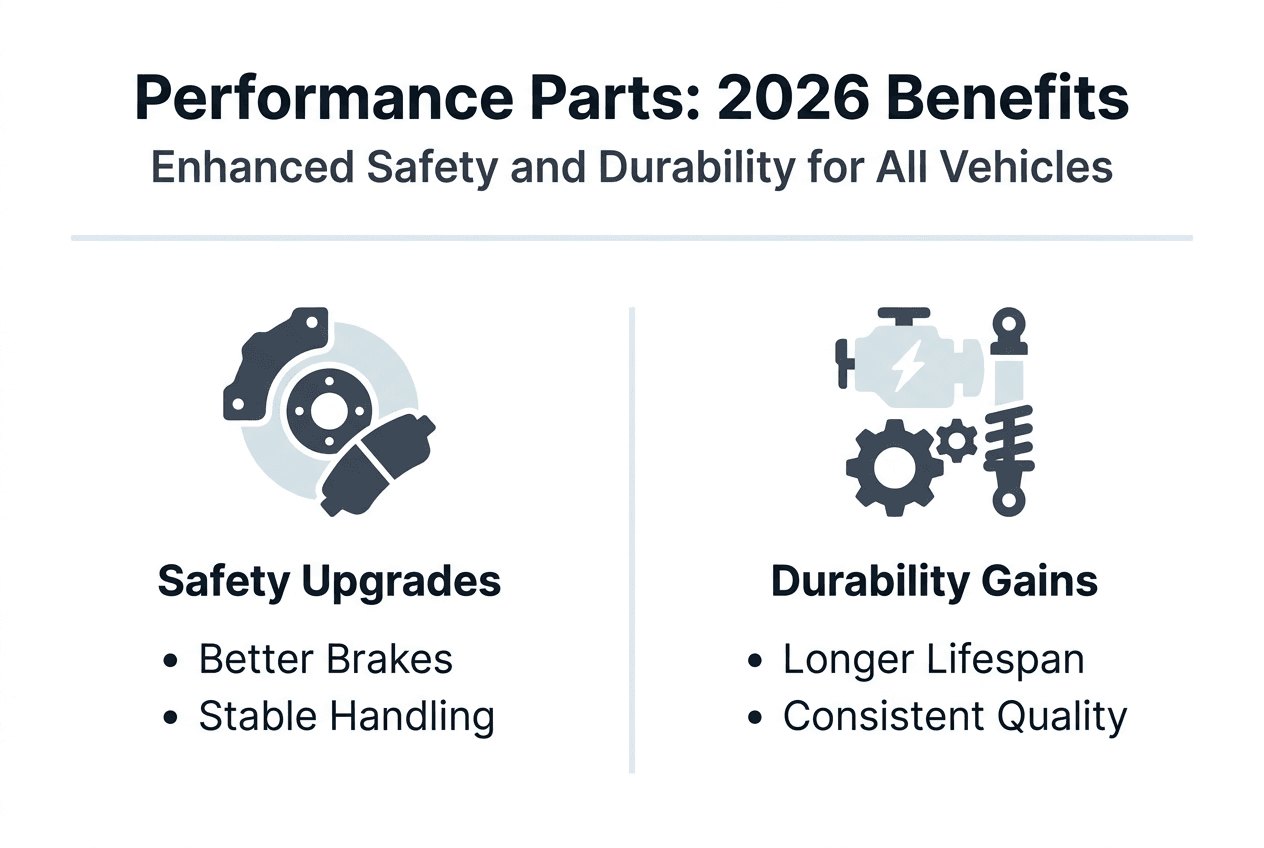
Authentic performance parts from established brands undergo extensive validation. They meet or exceed OEM specifications while delivering measurable enhancements in stopping power, cornering stability, and component lifespan.
How performance parts improve safety and durability
Upgraded performance brakes can increase braking efficiency by up to 30%, translating to shorter stopping distances in emergency situations. This improvement stems from advanced friction materials and ventilated disc designs that resist brake fade under repeated heavy use. European driving conditions, particularly mountain descents and high-speed motorway travel, expose standard brakes to thermal stress that performance components handle more effectively.
Performance suspension upgrades deliver safety benefits through multiple mechanisms:
- Enhanced chassis rigidity reduces body roll during cornering
- Upgraded bushings eliminate compliance that causes imprecise steering response
- Reinforced mounts maintain alignment under dynamic loads
- Quality dampers provide consistent control across temperature ranges
These improvements directly impact accident avoidance capability. When drivers need to execute emergency maneuvers, performance suspension components respond predictably without the vagueness common in worn or economy-grade parts.
| Component Type | Safety Benefit | Durability Advantage |
|---|---|---|
| Performance brake pads | 20-30% shorter stopping distances | 50% longer service life than economy pads |
| Upgraded suspension bushings | Eliminates steering play and vibration | Resists degradation from road salt and moisture |
| Reinforced strut mounts | Maintains alignment precision | Withstands 2-3x standard mount lifespan |
| Performance brake discs | Consistent pedal feel under stress | Heat-treated materials resist warping |
Durability advantages extend beyond component lifespan. Quality performance parts maintain their specifications longer, reducing performance degradation between service intervals. This consistency means your vehicle handles predictably throughout the maintenance cycle rather than exhibiting gradual decline.
Pro Tip: Track your brake pad thickness every 5,000 kilometers when using performance components. Their harder compounds wear differently than OEM pads, and monitoring prevents unexpected replacement needs during critical trips.
Mechanical reliability directly influences safety outcomes. Performance parts manufactured to tighter tolerances exhibit less play and deflection under load. This precision translates to steering accuracy, brake pedal consistency, and suspension behavior that drivers can trust in demanding situations.
Common misconceptions about aftermarket performance parts
Myth: Performance parts sacrifice ride comfort for handling gains. Modern performance suspension technology balances these objectives through sophisticated damper tuning and progressive spring rates. While track-focused components prioritize responsiveness, street-oriented performance parts from reputable brands maintain comfort suitable for daily European commuting. The harsh ride association stems from outdated products and improperly matched components.
Myth: Installing aftermarket parts automatically voids vehicle warranties. European warranty law protects consumers when using certified compatible parts. Manufacturers must prove that specific aftermarket components caused warranty claim failures. Quality performance parts meeting or exceeding OEM specifications typically maintain warranty coverage, especially when professionally installed with proper documentation.
- Professional installation documentation protects warranty rights
- Certified parts from established brands rarely trigger warranty disputes
- Keep receipts and specifications for any performance upgrades
- Consult your warranty terms regarding modification clauses
Myth: Performance parts cost too much for the value received. This calculation ignores total ownership costs. While premium performance brake pads cost more initially, their extended lifespan and superior performance often result in lower per-kilometer costs. Durability reduces replacement frequency, and enhanced safety provides value impossible to quantify in purely financial terms.
“Investing in quality performance brake components saved me two pad replacements over three years compared to OEM parts. The improved stopping confidence in winter conditions alone justified the initial cost difference.” — Franz Mueller, Munich automotive technician
Pro Tip: Calculate total cost of ownership over 50,000 kilometers rather than comparing initial purchase prices. Factor in replacement frequency, labor costs, and performance degradation rates for accurate value assessment.
Experts emphasize informed decision-making over blanket assumptions. Performance parts span wide quality and application ranges. Selecting inappropriate components creates problems, but choosing well-engineered parts matched to your vehicle and driving style delivers reliable benefits. The key lies in understanding your specific needs rather than accepting generalizations.
Comparison and framework for selecting performance parts
Successful performance part selection requires evaluating four critical factors. First, quality and brand authenticity matter enormously. Counterfeit or economy-grade components marketed as “performance” parts lack proper engineering and testing. Stick with recognized brands that provide certification documentation and clear specifications.
Second, compatibility verification prevents expensive mistakes. Performance parts designed for specific vehicle platforms account for brake caliper dimensions, suspension geometry, and mounting point locations. Generic “universal fit” claims often signal inadequate engineering.
Third, align component selection with your driving style. Aggressive mountain driving demands different brake compounds than urban commuting. Track day participants need heat management that daily drivers don’t require. Honest assessment of your actual usage patterns guides appropriate choices.
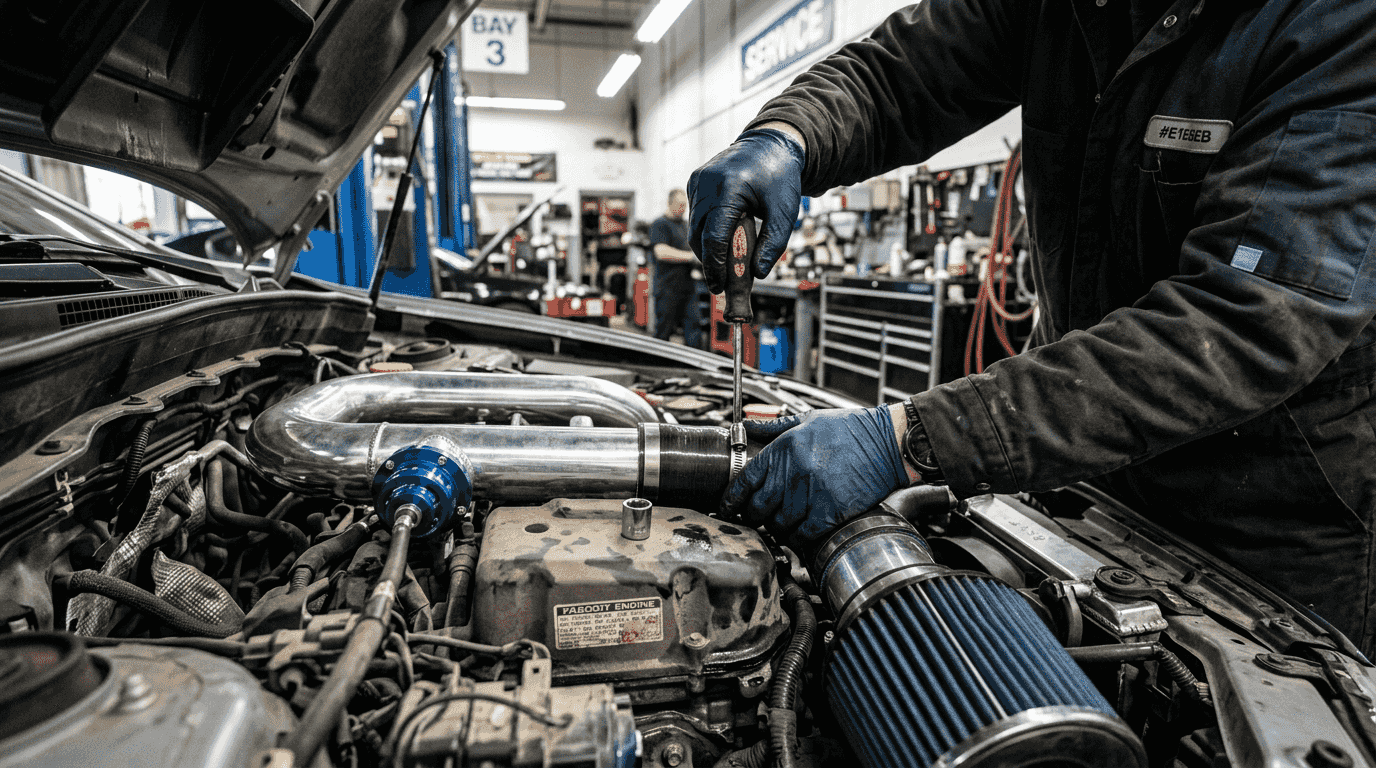
Fourth, professional installation ensures safety and warranty compliance. Performance components require proper torque specifications, alignment procedures, and break-in protocols. Amateur installation risks compromised performance and potential safety issues.
| Factor | Performance Parts | OEM Parts | Generic Aftermarket |
|---|---|---|---|
| Safety performance | Superior in demanding conditions | Adequate for normal use | Variable, often inferior |
| Durability | Extended lifespan with quality materials | Standard service life | Shorter lifespan, inconsistent quality |
| Cost | Higher initial investment | Moderate pricing | Lowest upfront cost |
| Compatibility | Engineered for specific applications | Perfect factory fit | May require modification |
| Warranty impact | Minimal when certified | Maintains all coverage | Potentially problematic |
Follow this stepwise approach for optimal results:
- Assess current vehicle condition and identify specific improvement goals
- Research compatible performance parts from established manufacturers
- Verify certifications and read independent reviews from European users
- Compare specifications against your driving requirements and conditions
- Budget for professional installation and proper break-in procedures
- Document all components and installation details for warranty protection
Poor quality or mismatched parts create cascading problems. Brake pads with incorrect friction characteristics cause premature disc wear. Suspension components designed for different vehicle weights compromise handling balance. These mistakes waste money while potentially creating safety hazards.
Professional installation provides expertise beyond basic mechanical skills. Certified technicians understand torque specifications, alignment procedures, and system integration. Their experience prevents common mistakes that compromise component performance and longevity.
Real world examples and user perspectives
A 2025 survey of European automotive enthusiasts revealed compelling adoption patterns. Among respondents who upgraded to performance brake systems, 78% reported noticeable improvements in stopping confidence during adverse weather. The investment averaged €600 for complete front and rear upgrades, with users reporting 40% longer service intervals compared to OEM components.
Consider Marcus from Stuttgart, who upgraded his daily driver with performance suspension bushings and reinforced strut mounts. His specific goals addressed excessive body roll during spirited alpine driving and imprecise steering response on motorways. After installation, he noted:
- Elimination of steering vagueness during lane changes
- Reduced body roll without compromising ride comfort
- Components maintained performance after 35,000 kilometers
- Total investment recovered through extended replacement intervals
Survey data highlights primary motivations for European drivers choosing performance parts:
- 42% seek enhanced safety margins in demanding conditions
- 31% prioritize longevity and reduced maintenance frequency
- 18% want improved handling for spirited driving enjoyment
- 9% respond to worn OEM components needing replacement
User-reported satisfaction centers on tangible daily benefits rather than dramatic transformations. Drivers consistently mention improved confidence during emergency braking, more predictable vehicle behavior in corners, and reduced maintenance anxiety. The psychological value of knowing your vehicle responds reliably in critical moments complements measurable performance gains.
Long-term value perception remains strongly positive among quality performance part users. Even drivers initially skeptical about premium pricing acknowledge total ownership benefits after experiencing extended component life and maintained performance characteristics. The contrast with economy aftermarket parts that require frequent replacement reinforces the value proposition.
These real experiences validate theoretical benefits discussed earlier. European driving conditions test vehicle systems rigorously, making performance part advantages particularly evident. Users who match components appropriately to their vehicles and driving styles consistently report satisfaction justifying their investments.
Practical application: choosing and maintaining your performance parts
Begin by honestly assessing your current vehicle’s performance and maintenance needs. Note any existing issues like brake fade on mountain descents, excessive body roll, or worn suspension components causing noise. These observations guide targeted upgrades delivering maximum impact.
Follow these practical steps for successful performance part adoption:
- Document your vehicle’s exact specifications including model year, engine variant, and existing component versions
- Research certified performance parts compatible with your specific vehicle platform using manufacturer databases
- Read independent reviews from European users driving similar routes and conditions
- Compare specifications like friction coefficients, load ratings, and service intervals against your requirements
- Select reputable suppliers emphasizing brand authenticity and providing detailed product information
- Budget for professional installation ensuring proper procedures and warranty compliance
- Follow manufacturer break-in recommendations for optimal component performance and longevity
Maintenance practices maximize your investment’s value and lifespan. Performance brake pads require periodic inspection for uneven wear patterns indicating caliper problems. Suspension components benefit from regular cleaning to remove road salt and debris that accelerate bushing degradation.
Schedule these maintenance activities:
- Visual inspection every 5,000 kilometers for signs of unusual wear or damage
- Cleaning of exposed suspension components during seasonal tire changes
- Torque verification of critical fasteners at manufacturer-specified intervals
- Performance evaluation noting any changes in brake feel or handling characteristics
- Documentation of service dates and observations for warranty purposes
Consider long-term cost efficiency over short-term price comparisons. Premium performance parts costing 40% more but lasting twice as long represent better value. Factor in labor costs for replacement, which remain constant regardless of part quality. This perspective shifts decision criteria from initial price to total ownership cost.
Seek professional advice when uncertainty exists about appropriate component selection. Experienced technicians familiar with European vehicles and driving conditions provide valuable insights. Their expertise prevents costly mistakes and ensures components match your actual needs rather than marketing claims.
Summary: maximizing vehicle potential with performance parts
Authentic performance parts deliver measurable safety improvements through enhanced braking efficiency, responsive handling, and extended component durability. European drivers benefit particularly from upgrades addressing demanding alpine terrain, variable weather conditions, and sustained high-speed motorway travel. The 30% improvement in braking performance alone justifies serious consideration for safety-conscious enthusiasts.
Choosing trusted brand parts engineered specifically for your vehicle platform ensures compatibility and reliability. Quality performance components balance enhanced capability with daily drivability, contradicting outdated assumptions about harsh ride quality. Modern materials and engineering deliver improvements without sacrificing comfort essential for European commuting.
Cost considerations require long-term perspective. While premium performance parts demand higher initial investment, their extended lifespan and maintained performance characteristics often result in lower total ownership costs. Factor replacement frequency, labor expenses, and safety value into your evaluation rather than comparing purchase prices alone.
Informed decisions based on accurate information and honest assessment of your driving needs produce optimal outcomes. Avoid generic claims and marketing hype by researching specifications, reading independent reviews, and consulting experienced professionals. Match components to your actual usage patterns rather than aspirational driving fantasies.
Explore suitable performance parts options that align with your vehicle’s requirements and your driving style. The combination of enhanced safety margins, improved handling confidence, and extended component life represents compelling value for European automotive enthusiasts committed to maintaining their vehicles properly.
Explore quality automotive performance parts at NordRace
NordRace specializes in authentic performance parts from trusted manufacturers serving European automotive enthusiasts. Our curated selection includes components engineered specifically for demanding driving conditions, from reinforced strut mount bushings for Honda vehicles to front reinforced stabilizer links for Honda and Subaru platforms.
Every component meets rigorous quality standards ensuring compatibility, durability, and performance. Whether you need a complete Honda Civic arm bushing set or individual upgrades, NordRace provides detailed specifications and expert guidance. Professional installation support and comprehensive product documentation protect your investment while maximizing performance gains. Explore our selection to discover how authentic performance parts enhance your vehicle’s safety, handling, and longevity.
FAQ
Are performance parts suitable for daily driving?
Yes, modern performance parts balance enhanced capability with daily comfort requirements. Manufacturers engineer street-oriented components maintaining ride quality while improving handling precision and braking performance. Professional installation and proper component selection ensure comfortable daily driving with added safety margins.
Will performance parts void my vehicle warranty?
Most warranties remain valid with certified, compatible performance parts that meet or exceed OEM specifications. European warranty law requires manufacturers to prove aftermarket components caused specific failures. Professional installation with proper documentation protects your warranty rights and ensures compliance with manufacturer requirements.
How do I know if a performance part fits my vehicle?
Verify compatibility by checking manufacturer specifications against your exact vehicle model, year, and variant. Consult certified technicians or reputable suppliers who provide detailed fitment information. Avoid generic “universal fit” claims and prioritize parts engineered specifically for your vehicle platform.
What maintenance do performance parts require?
Regular visual inspections every 5,000 kilometers identify unusual wear or damage early. Clean exposed suspension components during seasonal maintenance to prevent salt and debris accumulation. Follow manufacturer service guidelines and document maintenance activities for warranty compliance and optimal component longevity.
Recommended
- Hardrace - eesmine tugevdatud stabilisaatorivarras TPV Honda, Subaru – NordRace OÜ
- Hardrace - tugevdatud TPV ülemise ja alumise amortisaatori puks Honda – NordRace OÜ
- Hardrace - eesmine kompensatsioonipuks Honda Civic, CR-V – NordRace OÜ
- Hardrace - Esimese ja alumise õõtshoova puks - Amort Tesla Model 3, Mo – NordRace OÜ